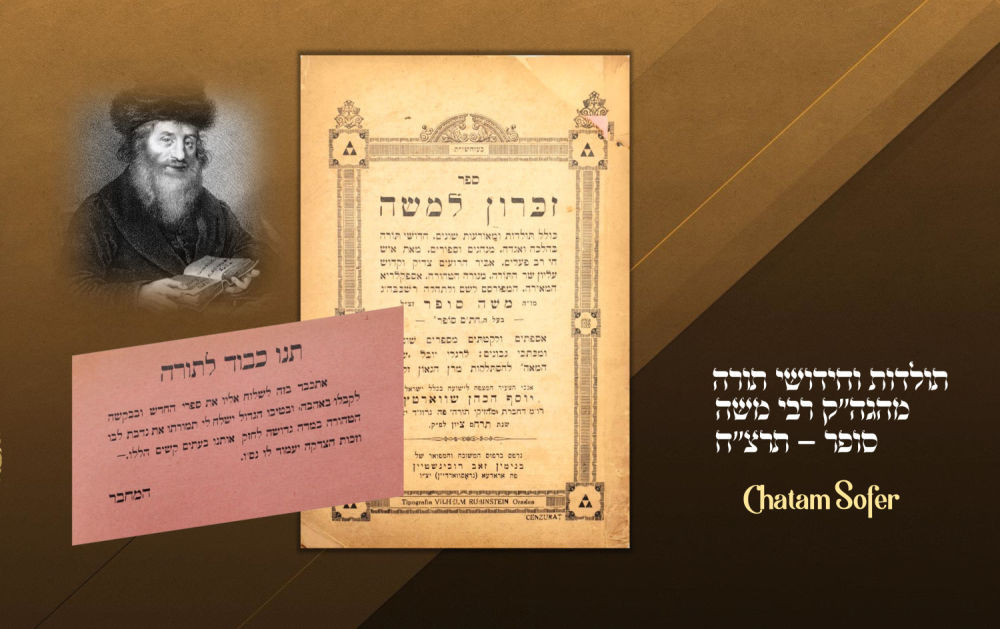
Leilão Bidspirit | זכרון למשה – תולדות ומאורעות
זכרון למשה – תולדות ומאורעות של הגה”ק החתם סופר – מרבי יוסף הכהן שווארץ – גרוסוורדיין תרצ”ח - זכרון למשה – תולדות ומאורעות של הגה”ק החתם סופר – מרבי יוסף הכהן שווארץ – גרוסוורדיין תרצ”ח כולל תולדות ומאורעות שונים, חדושי תורה בהלכה ואגדה (הוספות למפתחות שו”ת חת”ס, כמה מכתבים ותשובות לא נדפסו עדיין) מנהגים וספורים, מאת מו”ה משה סופר זצ”ל בעל החת”ם סופר. אספתים ולקטתים מספרים שונים, ומכתבי נבונים, לרגלי יובל שנת המאה להסתלקות מרן - אנכי יוסף הכהן שווארטץ, רו”מ דחברת ”מחזיקי תורה” פה גרוו”ד. עמ’ 42-44: צוואת משה ... בעל חת”ם סופר. עמ’ 145-150: עשרת הדברים האלה הגיעו לידי כמעט בגמר הדפסת הספר, מכבוד ... מו”ה מנחם מענדל מרגליות נ”י, אב”ד דק”ק פ’ ק’ ר’ הארינטש. בעמ’ 4 של המעטפת פאקסימיל ”כתב יד קדשו של מרן” ר’ משה סופר The final will of the Hatam Sofer, a biography, and writings by R. Joseph ben Naphatali ha-Kohen Schwartz (1877–1944) was a Hungarian rabbi and author. Born in Felsővisó, Hungary (now Viseul-de-Sus in Romania), R. Schwartz was the son of R. Naphtali ha-Kohen Schwartz and a pupil of R. Jacob Tennenbaum . He edited the periodical Va-Yelakket Yosef for 20 years, from 1899 to 1918, in Bonyhad. In 1924 he moved to Grosswardein (Oradea), where he served as rabbi to the Maḥzikei Torah society and published several important books. The most valuable are: Ẓafenat Pa'ne'aḥ (1909), notes on the Yad Yiẓḥak of Abraham Isaac Glueck; Ginzei Yosef (1930); and Va-Yizbor Yosef (1936), responsa. A detailed bibliography of his many publications published by Ben-Menahem in his Mi-Sifrut Yisrael be-Ungaryah (1958, 330–70), includes his testament, written a few months before his death in the Holocaust, together with a biography of him. R. Fuchs father R. Moses Zevi ben Benjamin Ze'ev Wolf saw in Hasidism an antidote to Haskalah and assimilation, stating in one of his responsa: ”The love of God and His Torah is the essence and source of Hasidism. When economic circumstances permit, one should occupy oneself in the study of Torah with deep deliberation and spiritual joy. It is also important to visit the zaddik from time to time, in order to learn from his ways. The wise man should learn from the zaddikim and their true disciples but pay no attention to the masses who go running after them.”