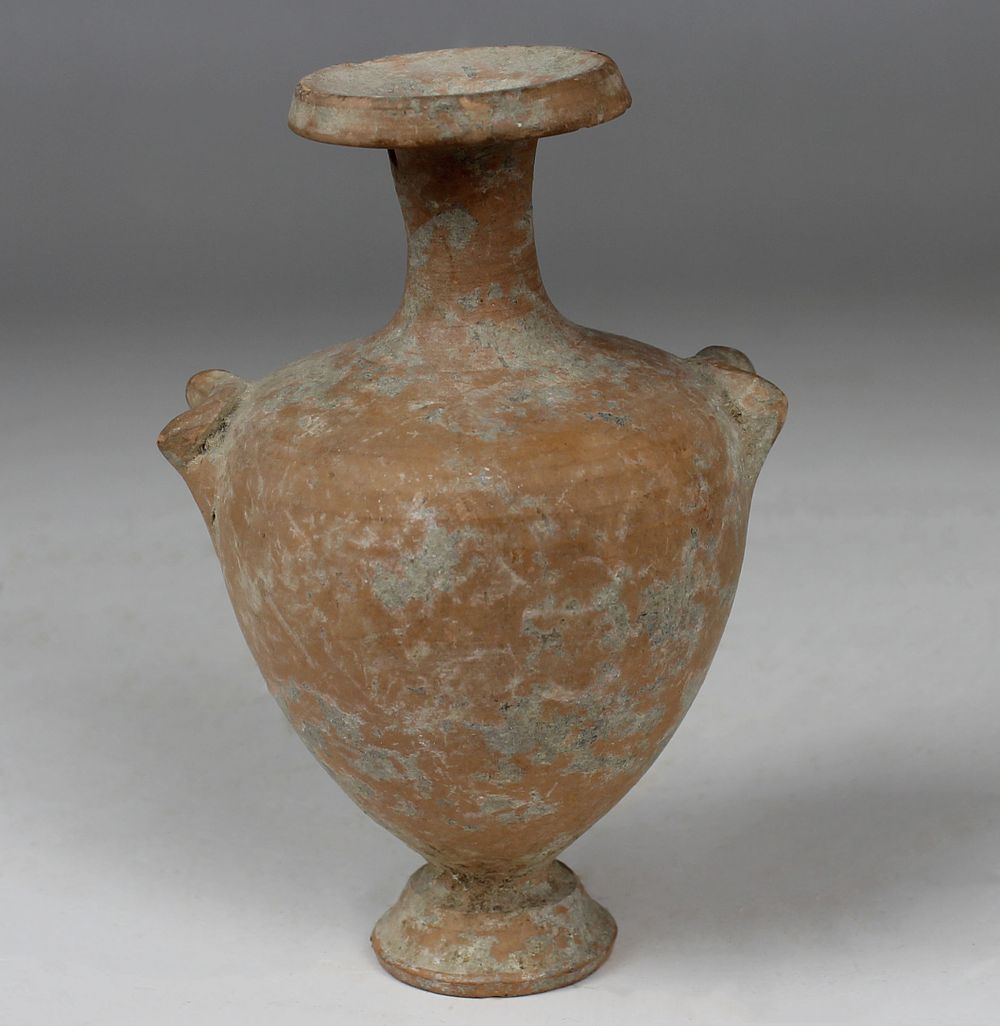
Leilão Bidspirit | Greek miniature amphora
Greek miniature amphora - ITEM: Miniature amphora MATERIAL: Pottery CULTURE: Greek PERIOD: 4th - 2nd Century B.C DIMENSIONS: 94 mm x 58 mm CONDITION: Good condition PROVENANCE: Ex English private collection, Sussex, mid-20th century private collection. Comes with Certificate of Authenticity and Export Licence. If you are from outside the European Union, we will have to apply for the export licence again for your country, this takes 3 to 5 weeks and has a cost of 5% of the hammer price, this amount will be added to the final invoice. Miniature amphoras were a common type of ceramic vessel produced during various periods of ancient Greek history, particularly in the Classical and Hellenistic periods. These small amphoras were typically crafted with the same techniques and styles as their larger counterparts but on a much smaller scale, often measuring only a few centimeters in height. Despite their diminutive size, miniature amphoras served a variety of purposes and were prized for their craftsmanship and decorative appeal. One of the primary functions of miniature amphoras was as votive offerings in religious contexts. These small vessels were often deposited in sanctuaries or placed in graves as offerings to the gods or as funerary gifts for the deceased. Their small size made them convenient and affordable offerings for individuals from all social classes, and they were often decorated with religious symbols, mythological scenes, or inscriptions invoking divine protection or blessings. Miniature amphoras also served as decorative items in domestic settings, where they were displayed as symbols of status and refinement. Wealthy households might collect sets of miniature vessels to showcase their appreciation for Greek art and culture. These miniature replicas allowed individuals to admire and study the intricate designs and craftsmanship of larger amphoras without the need for extensive storage space. Additionally, miniature amphoras were sometimes used as children's toys, providing young Greeks with miniature versions of everyday objects and familiarizing them with cultural and religious practices from an early age.