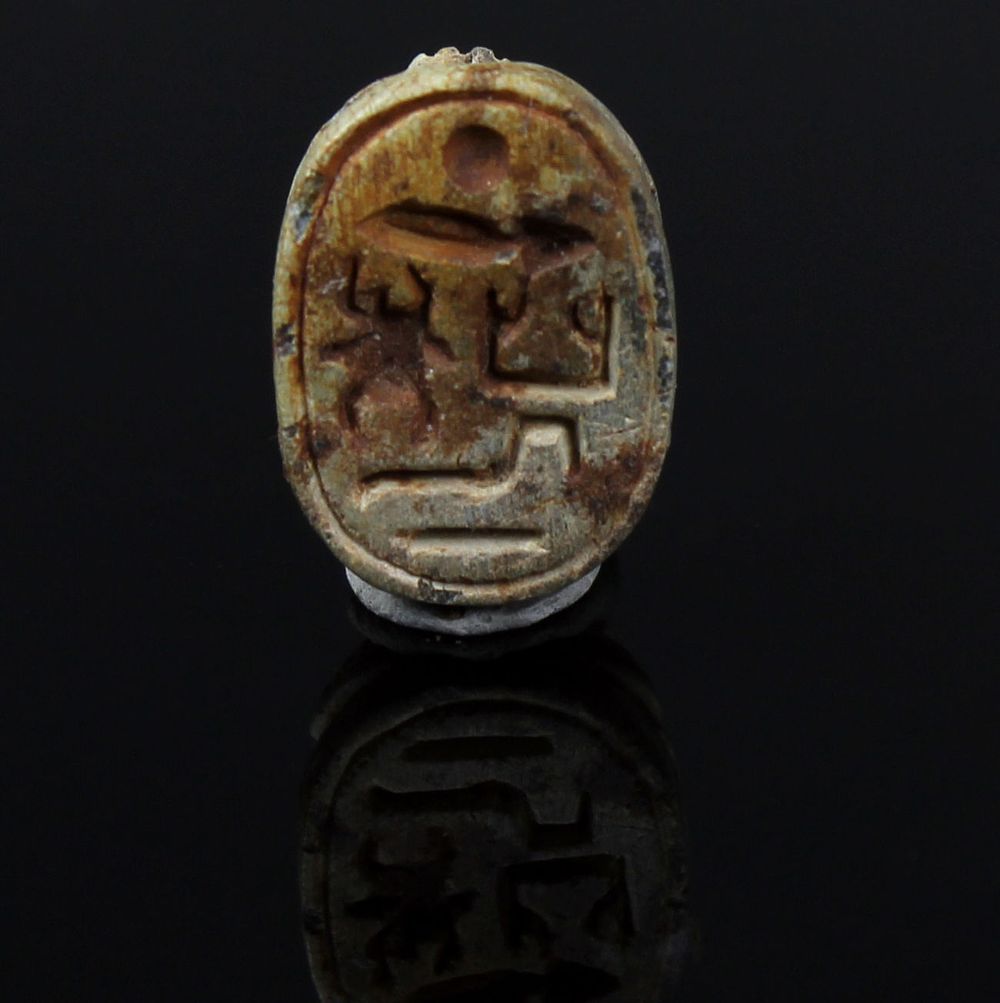
Leilão Bidspirit | Egyptian scarab with prenomen for
Egyptian scarab with prenomen for Ramesses II - ITEM: Scarab with prenomen for Ramesses II MATERIAL: Steatite CULTURE: Egyptian PERIOD: New Kingdom, XIXth Dynasty, 1304 – 1195 B.C DIMENSIONS: 15 mm x 11 mm CONDITION: Good condition PROVENANCE: Ex American egyptologist collection, active in the early part of the 20th century, brought to the US with the family in 1954. Comes with Certificate of Authenticity and Export Licence. If you are from outside the European Union, we will have to apply for the export licence again for your country, this takes 3 to 5 weeks and has a cost of 5% of the hammer price, this amount will be added to the final invoice. Scarabs crafted from steatite during the reign of Ramesses II, one of ancient Egypt’s most celebrated pharaohs, provide valuable insights into the religious and political ideologies of the time. Ramesses II, also known as Ramesses the Great, ruled Egypt during the 19th Dynasty (circa 1279–1213 BCE) of the New Kingdom period. His reign was marked by military conquests, monumental building projects, and a revival of traditional Egyptian religion and culture, all of which are reflected in the iconography and inscriptions found on scarabs produced during his rule. Scarabs featuring Ramesses II’s prenomen, or throne name, provide important evidence of his royal propaganda and self-representation. Ramesses II’s prenomen, Usermaatre Setepenre, meaning “The justice of Ra is powerful, chosen of Ra, ” emphasized his divine mandate to rule and his connection to the sun god Ra, one of the most important deities in the Egyptian pantheon. Scarabs bearing this prenomen often depicted Ramesses II in the guise of a warrior pharaoh, victorious in battle and favored by the gods, reinforcing his status as a powerful and legitimate ruler. The use of steatite for crafting scarabs during Ramesses II’s reign allowed artisans to create finely detailed designs and inscriptions, showcasing the technical skill and artistic craftsmanship of ancient Egyptian artisans. These scarabs served various functions, including as amulets for protection, seals for official documents, and commemorative items for religious or ceremonial purposes. The inclusion of Ramesses II’s prenomen on these scarabs not only served as a form of royal propaganda but also imbued the artifacts with divine authority and legitimacy, ensuring their efficacy as talismans and symbols of power. Ramesses II’s reign witnessed a flourishing of scarab production, with these artifacts being widely distributed throughout Egypt and beyond. They were often exchanged as diplomatic gifts, distributed to soldiers as rewards for valor, or buried with the deceased as part of funerary offerings. Scarabs bearing Ramesses II’s prenomen can be found in archaeological contexts ranging from royal tombs and temple caches to domestic dwellings and foreign sites, attesting to their widespread popularity and significance in ancient Egyptian society.