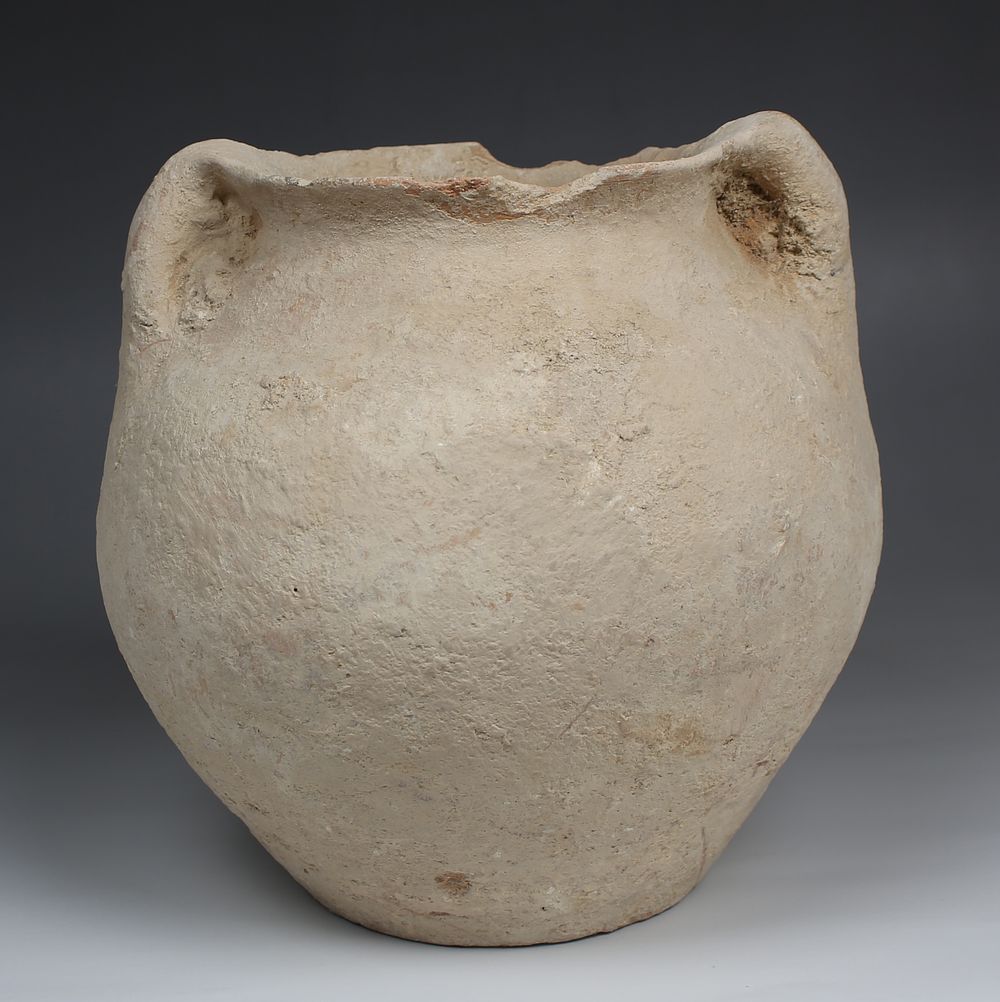
Leilão Bidspirit | Bronze Age jar
Bronze Age jar - ITEM: Jar MATERIAL: Pottery CULTURE: Bronze Age PERIOD: 3500 - 2000 B.C DIMENSIONS: 180 mm x 170 mm CONDITION: Good condition PROVENANCE: Ex Jerusalem private collection, acquired between 1975 – 1990. PARALLEL: AMIRAN, R., Ancient Pottery of the Holy Land, p. 53, Plate 12, Fig. 19 Comes with Certificate of Authenticity and Export Licence. If you are from outside the European Union, we will have to apply for the export licence again for your country, this takes 3 to 5 weeks and has a cost of 5% of the hammer price, this amount will be added to the final invoice. Bronze Age vessels, spanning roughly from 3300 to 1200 BCE, are crucial artifacts that provide insight into the daily life, trade, and technological advancements of ancient civilizations. This period, marked by the widespread use of bronze for tools and weapons, also saw significant developments in pottery and metalwork. Vessels from the Bronze Age were typically made from materials such as clay, bronze, and occasionally gold and silver, serving various functions from everyday domestic use to ceremonial purposes. Clay pottery from the Bronze Age is especially abundant and diverse, reflecting the technological and artistic progress of the time. Early Bronze Age pottery often featured simple, utilitarian designs, but as techniques improved, more intricate and decorated vessels emerged. Pottery from this period includes a wide range of forms, such as jars, bowls, cups, and storage containers. These items were often decorated with geometric patterns, incised lines, and sometimes painted motifs. The use of the potter's wheel, which became more widespread during this era, allowed for greater uniformity and refinement in the shape and size of the vessels. In many cultures, pottery styles can be used to distinguish different phases of the Bronze Age and to understand cultural interactions and trade. Bronze and metal vessels from the Bronze Age showcase the advanced metallurgical skills of ancient artisans. Bronze, an alloy of copper and tin, was favored for its durability and workability. Metal vessels were often used in elite and ceremonial contexts, indicating their high value and the status of their owners. These vessels could be intricately decorated with repoussé (hammered) designs, engravings, and sometimes inlaid with precious materials like gold or silver. The production of metal vessels required sophisticated knowledge of smelting and casting techniques, reflecting a high level of craftsmanship.