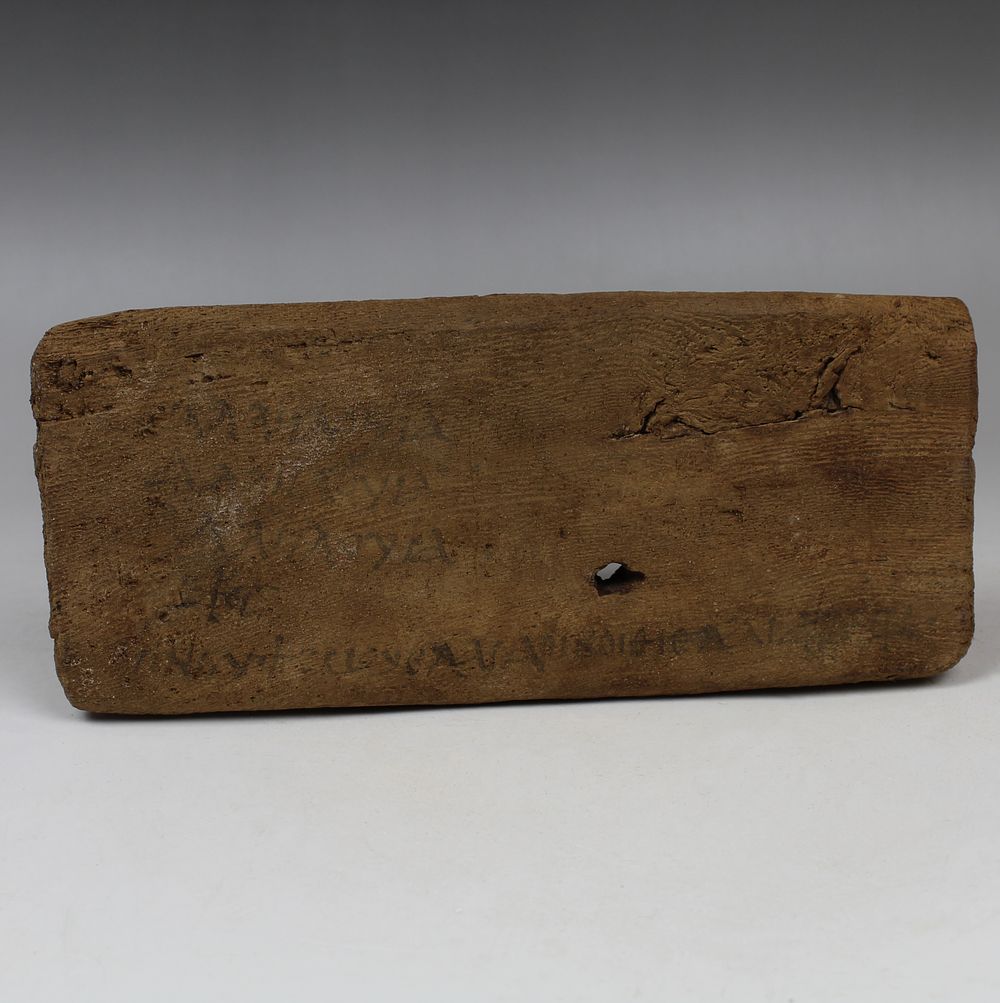
Leilão Bidspirit | Egyptian ostrakon with coptic text
Egyptian ostrakon with coptic text - ITEM: Ostrakon with coptic text MATERIAL: Wood CULTURE: Egyptian, Coptic PERIOD: 4th - 7th Century A.D DIMENSIONS: 85 mm x 210 mm x 15 mm CONDITION: Good condition PROVENANCE: Ex English private collection, London, acquired before 1980s PARALLEL: THE METROPOLITAN MUSEUM OF ART, Accession number X.608.1 Comes with Certificate of Authenticity and Export Licence. If you are from outside the European Union, we will have to apply for the export licence again for your country, this takes 3 to 5 weeks and has a cost of 5% of the hammer price, this amount will be added to the final invoice. Ostraka with Coptic text from Egypt are valuable artifacts that provide insights into the daily life, language, and culture of late antique Egypt, particularly during the early Christian period. An ostrakon (plural: ostraka) is a piece of pottery or stone, often a fragment of a broken vase or a flat piece of limestone, used as a writing surface. Coptic, the final stage of the Egyptian language written in a script derived from Greek with additional characters for sounds specific to Egyptian, became the dominant written language of Egypt from the 3rd century CE onwards. Ostraka with Coptic text are significant as they offer a glimpse into the everyday activities, administrative functions, and religious practices of the Coptic-speaking population. The texts on these ostraka vary widely in content, including letters, receipts, tax records, school exercises, and religious texts. This diversity provides a comprehensive picture of various aspects of life in Coptic Egypt. For example, many ostraka contain personal letters that reveal details about family relationships, economic transactions, and social interactions. Administrative ostraka might record tax payments or deliveries of goods, illustrating the bureaucratic workings of the time. Religious ostraka often feature prayers, biblical quotations, or liturgical instructions, shedding light on the spread of Christianity and the religious practices of the Coptic community. The study of Coptic ostraka is crucial for understanding the linguistic and cultural transition from the ancient Egyptian to the early Christian period in Egypt. As Coptic evolved from Demotic Egyptian and incorporated Greek elements, these texts demonstrate the linguistic shifts and the blending of cultural influences. Moreover, because ostraka were used for informal or everyday writing, they provide a more immediate and personal perspective compared to the more formal and monumental inscriptions on papyri or stelae.