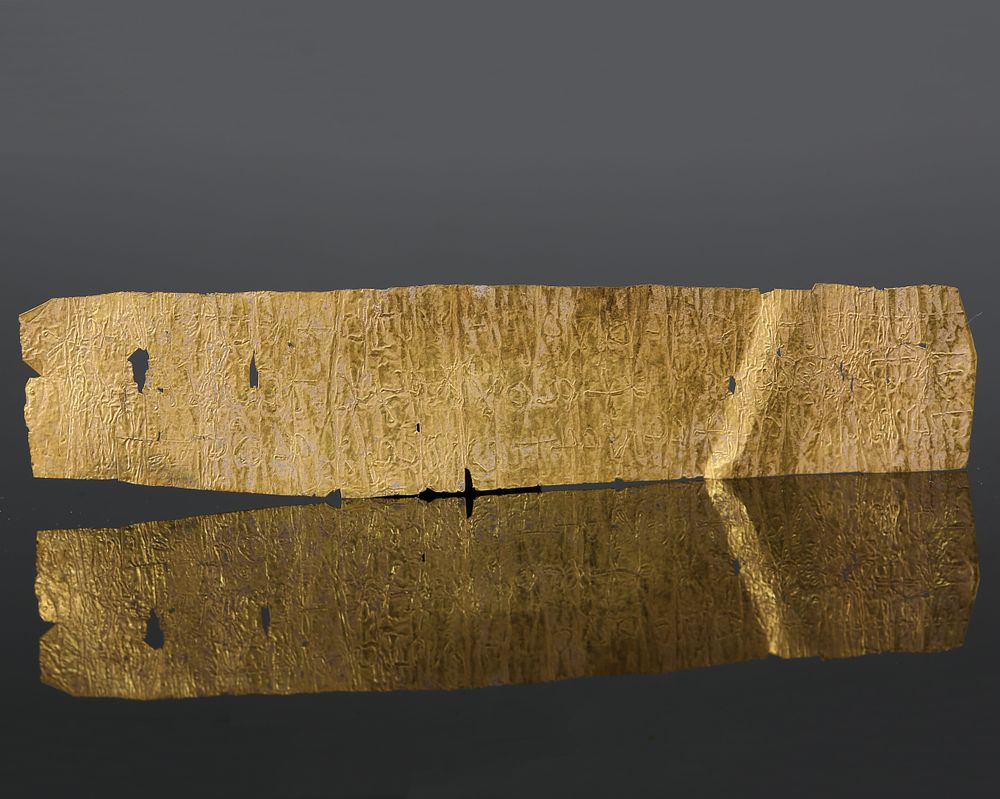
Leilão Bidspirit | Roman amulet in rectangular sheet
Roman amulet in rectangular sheet (lamella) with Greek cursive writing - ITEM: Amulet in rectangular sheet (lamella) with Greek cursive writing MATERIAL: Gold CULTURE: Roman PERIOD: 1st - 3rd Century A.D DIMENSIONS: 13 mm x 88 mm, 0,93 gr CONDITION: Good condition PROVENANCE: Ex European dealer, bought from a European private collection before 2000s BIBLIOGRAPHY: KOTANSKY, ROY D., A Gold Lamella for 'Blessed' Abalala (2016) PARALLEL: The British Museum Online Collection, Museum number 2009,8042.1 Comes with Certificate of Authenticity and Export Licence. If you are from outside the European Union, we will have to apply for the export licence again for your country, this takes 3 to 5 weeks and has a cost of 5% of the hammer price, this amount will be added to the final invoice. The rectangular sheet amulet, or lamella, bearing Greek cursive script is a fascinating and common artifact of personal magic and religion in the Roman world. These lamellae were typically made of thin, malleable metal, most often gold, silver, or lead, with gold being reserved for the most precious and powerful amulets. They served a similar protective or coercive function to defixiones (curse tablets), but instead of being pinned down to affect a target, they were folded, rolled, or crumpled into a small packet and then worn on the body—often placed in a cylindrical metal capsule—to protect the wearer or secure a desired outcome. The use of Greek cursive was dominant because Greek remained the lingua franca of magic, science, and intellectual pursuits across the eastern Mediterranean and was highly valued in Roman magical practice everywhere. The text inscribed on these amulets is what defines their magical power. They frequently feature invocations of powerful deities or spirits, sometimes mixing Greek, Egyptian, and Jewish names in a syncretic blend typical of Greco-Roman magic. Common elements include magical voces (meaningless-sounding words of power), palindromes, and charaktēres (magical signs or symbols) that were believed to compel the divine forces. The content falls into several categories: prayers for protection from illness, demons, and evil eye; love spells; or appeals for good fortune. The choice of a rectangular metal sheet, rather than clay or papyrus, was deliberate, as the durable, inert metal was believed to be a more permanent and effective vehicle for the written spell, ensuring its power would last as long as the wearer possessed the amulet. From an archaeological perspective, these lamellae provide direct evidence of the popular religious beliefs and daily magic practiced by Roman-era individuals, a realm often undocumented in official histories. Workshops specializing in their manufacture flourished, and in some contexts, there is evidence that the thin sheets were even ”struck” or impressed from master molds to allow for mass production of popular protective phrases, though most were carefully inscribed by hand using a stylus. The discovery of these amulets in graves and domestic contexts across the Roman Empire—from Egypt to Britain—highlights the universality of personal anxiety and the dependence on magic for perceived control over fate, a critical facet of daily life that coexisted with official Roman state religion.