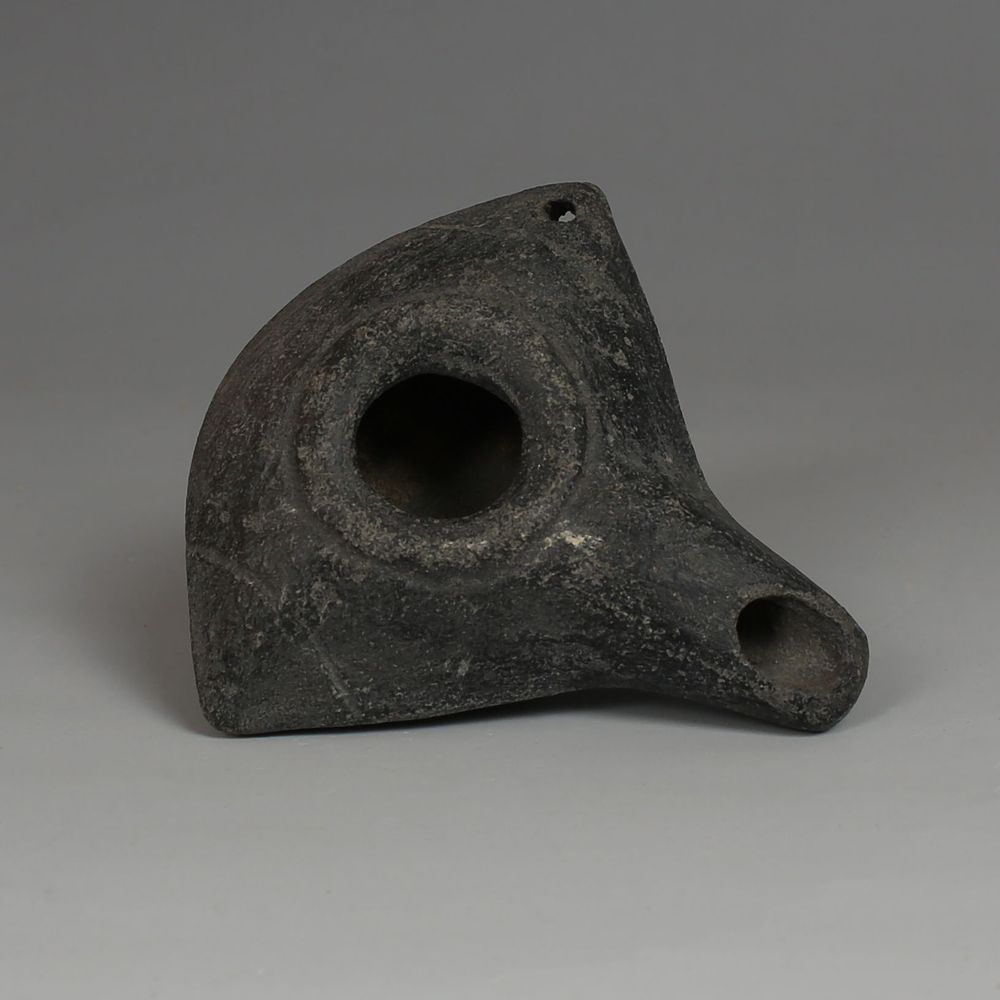
Leilão Bidspirit | Greek oil lamp
Greek oil lamp - ITEM: Oil lamp MATERIAL: Pottery CULTURE: Greek PERIOD: 4th - 3rd Century B.C DIMENSIONS: 27 mm x 73 mm x 75 mm CONDITION: Good condition PROVENANCE: Ex French private collection, acquired before 2000s Comes with Certificate of Authenticity and Export Licence. If you are from outside the European Union, we will have to apply for the export licence again for your country, this takes 3 to 5 weeks and has a cost of 5% of the hammer price, this amount will be added to the final invoice. Greek oil lamps (lychnoi) were essential and commonplace objects in ancient Greek life, providing necessary illumination for domestic, professional, and ritual activities from the Bronze Age through the Hellenistic period. Initially, lighting was achieved using simple open-bowl lamps made of clay, which evolved from simple saucers with a slightly pinched rim to hold the wick. The key development occurred around the 6th century BCE when the shape transitioned into the more efficient ”open shoe” or ”shoe-shaped” lamp, featuring a circular reservoir and a distinct spout (or nozzle) where a linen or fiber wick was placed. This design minimized oil spillage and provided a focused, steady flame, signaling the beginning of the standardized Greek lamp form. The shift towards enclosed lamps—common from the 4th century BCE onwards—marked a major innovation. These lamps featured a completely enclosed circular or rounded body (reservoir) with three main openings: a small hole for the wick (the nozzle), a larger central hole for filling the oil (the filling hole), and often a small hole to allow air circulation. This enclosed design improved fuel efficiency, reduced smoke and odor, and made the lamps portable. Materials varied, but the vast majority of lamps were made of terracotta; the wide availability and ease of molding clay allowed for mass production and affordability. More luxurious lamps for public use or wealthy homes were sometimes crafted from bronze, often featuring stands or multiple nozzles. In terms of function and context, Greek oil lamps were ubiquitous. They were indispensable in domestic life for lighting work areas and dining rooms, and played a significant role in religious ceremonies and public festivals. They also served as frequent grave goods in burials, where they were believed to provide light for the deceased in the underworld. The decoration of the lamps, typically found on the discus (the top flat surface around the filling hole) in the Hellenistic era, included simple geometric patterns, rosettes, or more complex molded reliefs of deities, animals, or theatrical masks. This diverse usage and evolving design reflect their fundamental status as technological and cultural artifacts throughout the ancient Greek world.